
Production · Campaigns
Advertising
Campaigns.
Commercials and branded content, produced at campaign scale.
A campaign is not a collection of outputs that share a colour palette. It is one proposition, carried intact across every surface the audience will meet it on — the broadcast break, the feed, the shelf, the screen in the lobby. Puzzle Media Production has been building those systems since 2017, across Egypt and Saudi Arabia, under one roof.
Broadcast contexts our advertising work has appeared in.
Seven phases — scroll to build the campaign
Phase 01
InsightBefore the idea, the fact.
A campaign that starts with an execution is a campaign built on nothing. We start with the one thing that is demonstrably true about the category, the audience, and the moment.
Insight is not a mood board. It is the work of finding the single unglamorous fact that makes an argument necessary — why this audience currently does something else, what the category has trained them to ignore, and what the business actually needs to change. Everything downstream is judged against it. If a beautiful execution does not serve the fact, the execution is wrong, and it is far cheaper to discover that here than in a grade suite.
Phase output
A written proposition brief: one fact, one objective, one measure.
The question it answers
What is actually true, and why does anyone need to hear it?
What the phase consists of
Category Audit
What every competitor is already saying, and the space that leaves.
Audience Truth
Who is watching, in what state of attention, and what they currently believe.
Media Reality
Where the campaign will actually be seen: broadcast break, feed, shelf, or screen.
Business Objective
What must be different for the client once the flight ends.
Message Territory
The claims the brand can make and defend, narrowed to the ones worth making.
Success Definition
The measure agreed in writing before anyone falls in love with a treatment.
Phase 02
PropositionOne sentence the entire campaign hangs from.
A campaign is not a set of assets that share a colour palette. It is a single proposition, expressed with enough force that it survives being cut to six seconds and cropped to a square.
This is the compression phase. The insight becomes one idea, and the idea becomes one sentence that a media planner, a colourist, and a client's board can all repeat without amending. We deliberately argue it before we design it: a proposition that cannot withstand a hostile question in a meeting will not withstand a hostile scroll. Only once the sentence holds do we build the visual proposition around it — the grammar, the palette, the lens character, the sonic identity — so that every later format inherits a centre instead of inventing one.
Phase output
An approved proposition, a line, and a visual and sonic language.
The question it answers
Can the whole campaign be said in one sentence?
What the phase consists of
The Central Idea
One proposition, small enough to hold and strong enough to argue with.
The Line
The verbal expression, written to survive translation into Arabic and English.
Visual Proposition
Palette, lens character, movement, and the grammar of the cut.
Sonic Identity
The music, voice, and sound signature the campaign is recognised by.
Proof Structure
How the claim is demonstrated on screen rather than merely stated.
The Argument Test
The proposition put under hostile questioning before a budget is committed.
Phase 03
ArchitectureThe asset system is designed before anything is shot.
Most campaigns are not under-produced. They are under-planned: a hero film is shot beautifully, and then someone is asked on a Thursday for nine verticals and a set of stills that were never covered.
Architecture is where the campaign stops being a film and becomes a system. Every intended output is mapped first — durations, aspect ratios, languages, platform specifications, legal supers, endcards, and the delivery date each one is hostage to. That map then works backwards into the shoot: which setups must be covered vertically, which frames must be composed safe for a square crop, which performance must be shot twice because the six-second cut cannot use the sixty-second read. Planned here, this coverage costs minutes on the day. Discovered later, it costs a reshoot.
Phase output
A signed-off asset matrix, coverage plan, and delivery schedule.
The question it answers
Does the plan already contain every asset the campaign needs?
What the phase consists of
Asset Map
Every deliverable named and counted before a single day is booked.
Format Matrix
Durations, aspects, and platform specifications resolved into one grid.
Coverage Plan
What the camera must capture so every format exists without compromise.
Safe-Area Strategy
Framing composed for 16:9, 1:1, 4:5, and 9:16 in the same setup.
Language Versions
Arabic and English scripting, casting, and supers planned in parallel.
Rights and Usage
Talent, music, and location terms scoped to the real media plan.
Naming and Delivery Spec
A convention agreed early so four hundred files stay legible.
Approval Path
Who signs off what, in what order, with dates attached.
Phase 04
CaptureOne shoot, engineered to produce a campaign.
The hero film and the fortieth cutdown come off the same days, the same crew, and the same lighting state — which is the only reliable way to make a campaign look like one campaign.
A campaign shoot is not a commercial shoot with extra pressure. It is a coverage exercise: the schedule is built so that hero setups, cutdown-specific action, vertical framings, product tabletop, stills, and behind-the-scenes are all taken while the set is standing and the talent is contracted. A dedicated stills unit works alongside the motion unit rather than after it. Every card is offloaded, checksummed, and duplicated before it leaves the floor. Nothing about this is improvised; it is simply the plan from Architecture being executed on a clock.
Phase output
Verified, duplicated rushes covering every asset on the matrix.
The question it answers
Is every planned output already on a card before we wrap?
What the phase consists of
Hero Film
The central execution, shot to the standard the campaign is judged by.
Cutdown Coverage
Alternate reads and beats that the short versions actually need.
Vertical and Square Capture
Dedicated framings, not crops rescued in post.
Stills Unit
A photographer working the same set for press, OOH, and social.
Product and Tabletop
Controlled macro passes for pack shots, endcards, and retail.
Talent Blocks
Performance banked for every language and every duration in contract.
Behind the Scenes
The making-of material that the campaign's owned channels will need.
Phase 05
VersionsA master, and everything descended from it.
Consistency across a campaign is a post-production discipline. One master is finished to the highest standard, and every other asset is derived from it rather than assembled beside it.
The hero is cut, graded, and mixed first, and it becomes the reference. Cutdowns are then built from the same timeline and the same grade, not re-edited from scratch by someone working from a memory of the film. Aspect versions are reframed shot by shot with the director's intent intact. Subtitles, dubbed mixes, legal supers, endcards, and platform-specific loudness are treated as finishing work, not as an afterthought performed by whoever is free. Every version is numbered, reviewed against timecoded notes, and closed with a decision — so a campaign of eighty files still has exactly one visual identity.
Phase output
A numbered, spec-compliant asset set with one visual identity.
The question it answers
Does every file look like it came from the same campaign?
What the phase consists of
Master Grade
The hero finished first and used as the single colour reference.
Cutdowns
60, 30, 15, and 6 second versions built from the master timeline.
Aspect Versions
16:9, 1:1, 4:5, and 9:16 reframed shot by shot, not centre-cropped.
Localisation
Arabic and English subtitles, supers, and dubbed mixes.
Sound Mixes
Broadcast loudness, platform loudness, and a sound-off cut that still reads.
Static Extraction
Key frames, stills, and layered artwork pulled for OOH and display.
Endcards and Legal
Brand lockups, offers, and mandated supers versioned per market.
Phase 06
DistributionThe campaign meets the audience somewhere specific.
Broadcast QC, platform ingest, and retail screens all have opinions. Delivery is where a campaign either passes on the first submission or spends a week in email.
Every destination gets a file built for it: codec, container, loudness, frame rate, and safe area to that destination's published specification. Broadcast masters are delivered to network requirements and cleared through QC. Platform assets are uploaded with the metadata, thumbnails, and captions that determine whether they are watched at all. Our advertising work has been broadcast on MBC, Rotana, DMC, and CBC — these are broadcast contexts our films have appeared in, and the standard those contexts demand is the standard every asset in the set is finished to, including the ones that will only ever play in a feed.
Phase output
Accepted deliveries across every channel on the media plan.
The question it answers
Will every destination accept this on the first submission?
What the phase consists of
Broadcast Delivery
Network-spec masters, QC-cleared, delivered against the traffic deadline.
Paid Social
Platform-native assets with captions, thumbnails, and correct safe areas.
Programmatic and Display
Cutdowns and statics sized to the buy, not to a guess.
Out of Home and Retail
High-resolution artwork and looping screen versions for physical space.
Owned Channels
Site, app, and CRM versions handed over ready to publish.
Platform QC
Every submission checked against spec before it reaches the client.
Phase 07
ResonanceWhat the campaign did, stated as a number.
A campaign that is never measured is a campaign that can never be improved. The measure agreed in Insight is the measure reported here, unchanged.
Once the flight is live we read the campaign back: which cut holds attention and where it loses it, which thumbnail earns the view, which market responds to which language version, and whether the business objective actually moved. Creative diagnostics are honest — including the finding that a favourite execution underperformed. Where the plan allows for iteration, we recut, reframe, or re-version against what the data says rather than against what the room preferred. Everything learned is written down and carried into the next campaign, which is the only compounding asset in this business.
Phase output
A reported result against the original measure, and a documented learning.
The question it answers
Did the thing we said would change actually change?
What the phase consists of
Baseline and Benchmarks
The pre-flight position, so any movement can be attributed.
Attention Metrics
Retention curves per cut, per platform, per market.
Creative Diagnostics
Which idea, frame, or line is doing the work — and which is not.
Iteration Cycle
Recuts and re-versions produced mid-flight from existing coverage.
Flight Reporting
A single readout against the success definition agreed in Phase 01.
Learning Archive
Findings written down and inherited by the next campaign.
End to end
One idea. Eighty files. No drift between them.
Campaigns fail at the joins: a proposition that survives the pitch and dissolves in the cutdowns, a vertical version cropped from a frame that was never composed for it, a market that receives its language as an afterthought. Running all seven phases in-house is how those joins are removed.
- Insight
A written proposition brief: one fact, one objective, one measure.
Revisit phase 01 - Proposition
An approved proposition, a line, and a visual and sonic language.
Revisit phase 02 - Architecture
A signed-off asset matrix, coverage plan, and delivery schedule.
Revisit phase 03 - Capture
Verified, duplicated rushes covering every asset on the matrix.
Revisit phase 04 - Versions
A numbered, spec-compliant asset set with one visual identity.
Revisit phase 05 - Distribution
Accepted deliveries across every channel on the media plan.
Revisit phase 06 - Resonance
A reported result against the original measure, and a documented learning.
Revisit phase 07
What we make
Eight campaign formats, one production standard.
A Ramadan campaign and a product launch are different problems with different calendars. They are not different standards. Every format below runs through the same seven phases.
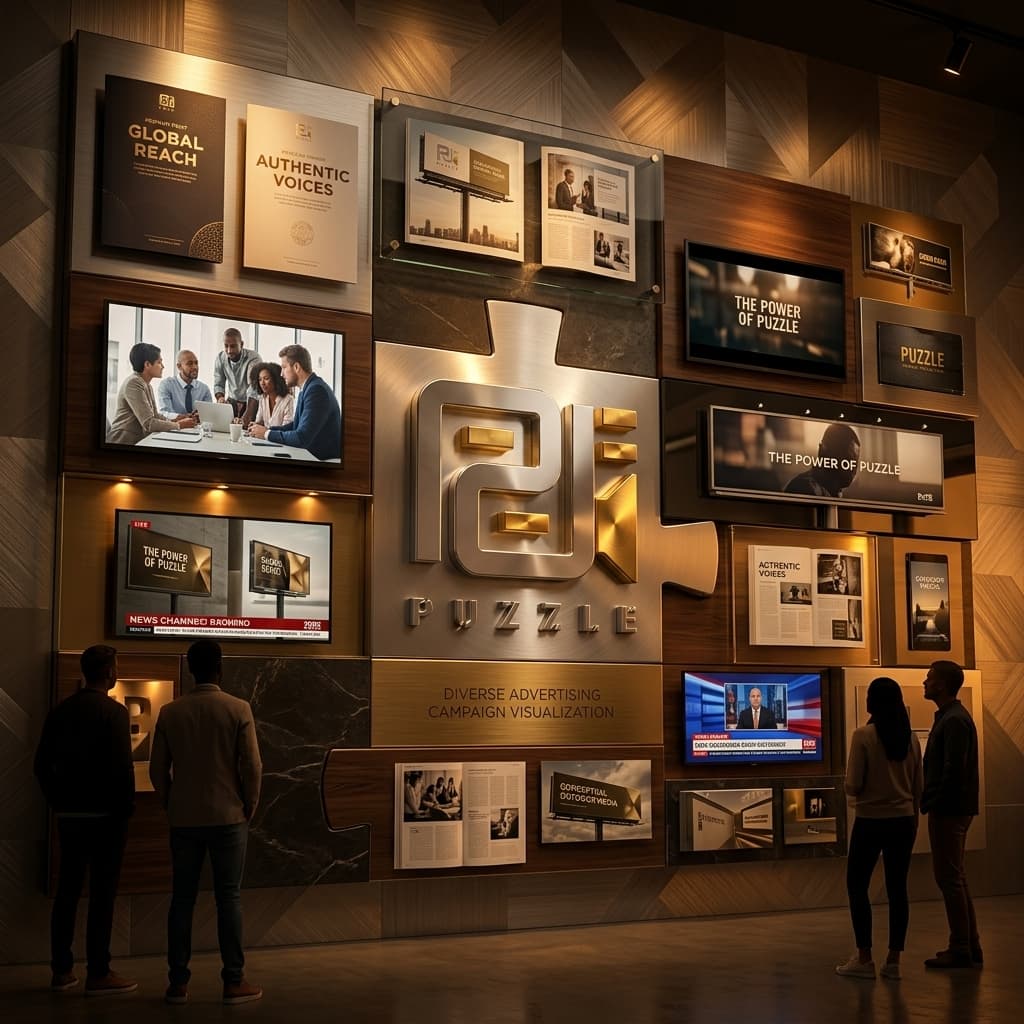
Television Commercials
Broadcast-spec films built for the break, cleared through network QC.
Digital Hero Films
Longer online executions where attention is earned rather than bought outright.
Social-First Content
Vertical work conceived for the feed, not rescued from a horizontal master.
Branded Content
Films that carry a brand argument without behaving like an advertisement.
Product and Launch
Campaigns built around a date, a price, and a reason to act now.
Ramadan and Seasonal
Regional campaigns produced against a fixed cultural calendar.
Retail and Promotional
High-volume versioned assets for offers, markets, and store networks.
Always-On Systems
Content architectures that keep a channel fed between hero moments.
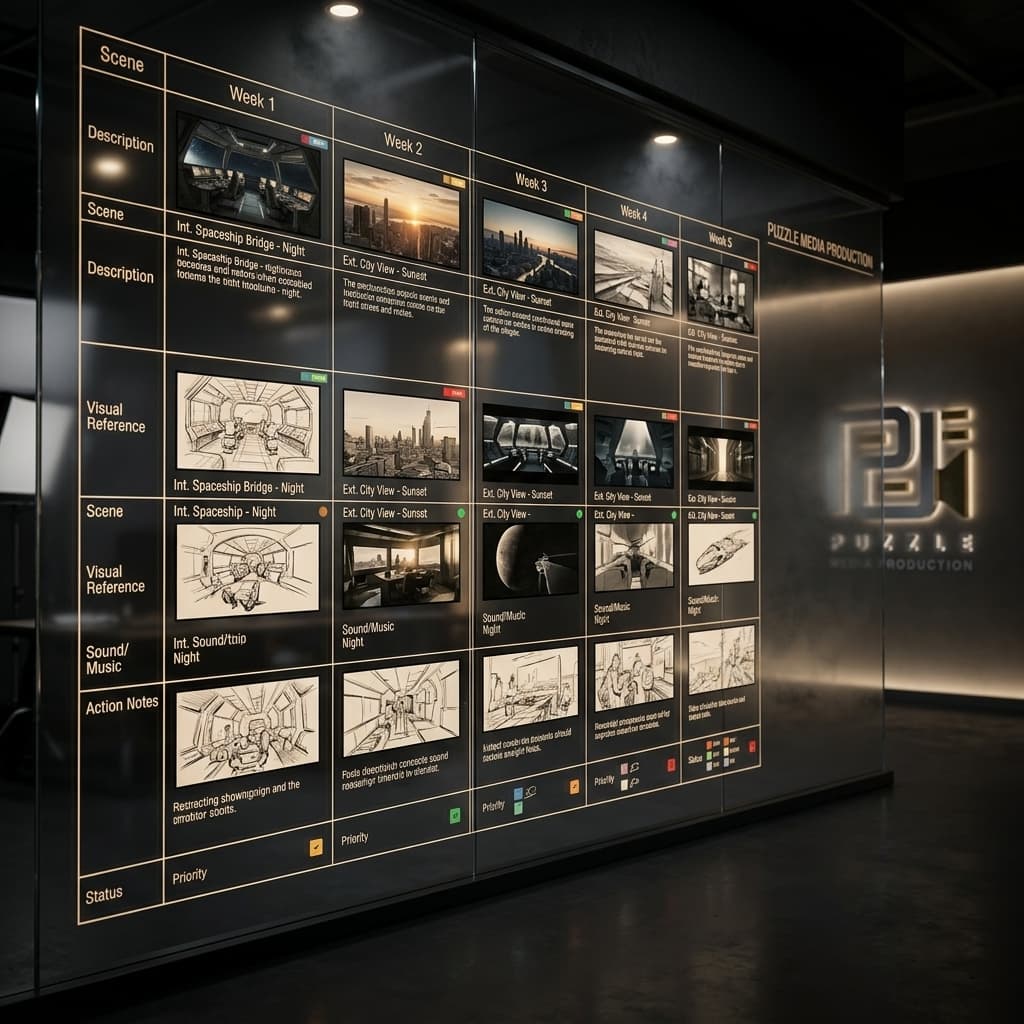
One shoot, one matrix
Every surface, planned before the first setup.
This is the document that makes a campaign a campaign. It is agreed in Phase 03 and it is what the shooting schedule is built backwards from — which is why nobody has to invent nine verticals on a Thursday.
01
Broadcast
60s · 30s · 15s
Network-spec masters with legal supers and mandated endcards.
02
Online video
Hero · 30s · 15s · 6s
Platform loudness, captions, and thumbnail frames included.
03
Vertical social
9:16 · 4:5
Captured natively, sound-off legible, hook inside two seconds.
04
Feed and display
1:1 · statics
Extracted from the graded master so the palette never drifts.
05
Out of home
Print · motion
Stills-unit imagery at print resolution, plus looping screen cuts.
06
Owned and CRM
Site · email · app
Compressed for load without giving away the grade.
07
Retail
Screen loops · POS
Silent versions that carry the message without audio.
08
Archive
Masters · project
Organised, documented, and reopenable in five years.
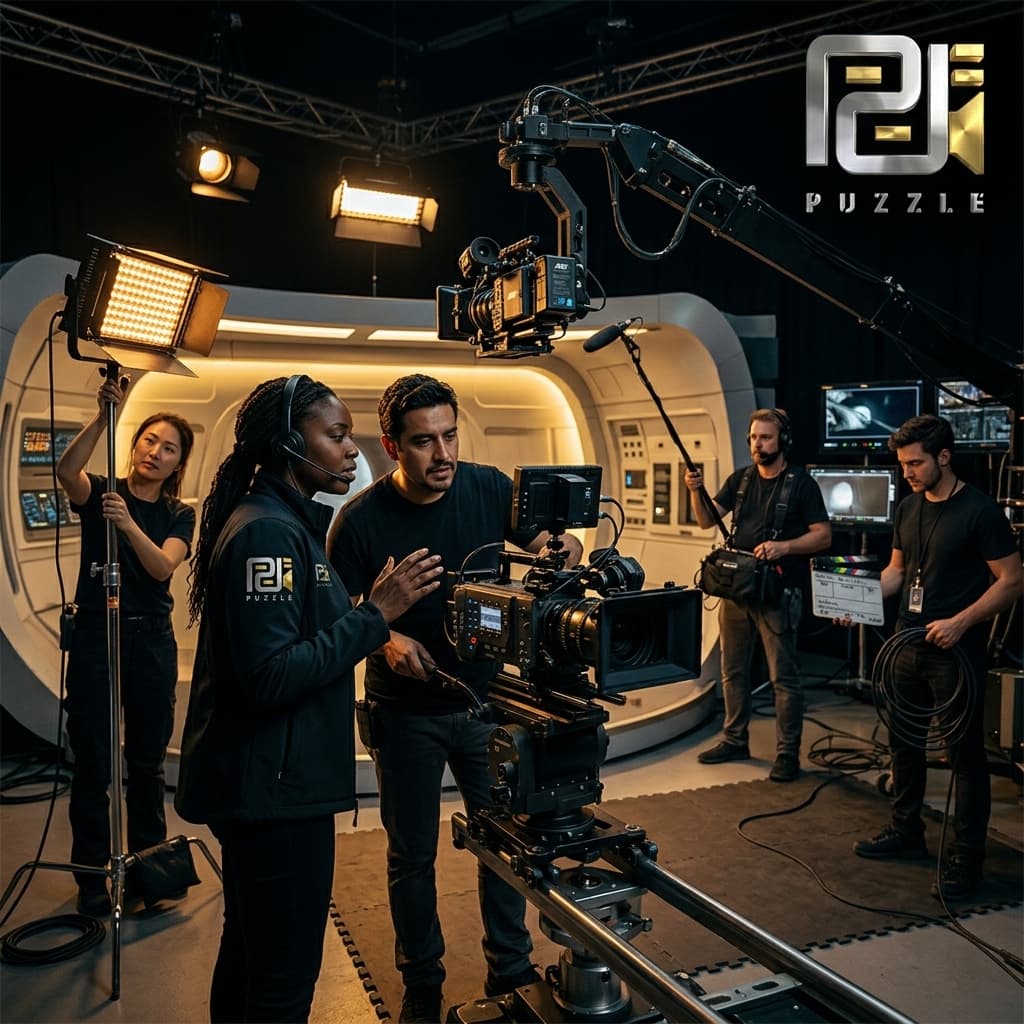
The people
Ten crafts holding one proposition.
The hardest part of a campaign is not any single craft. It is keeping ten of them pointed at the same sentence for three months.
01
Campaign Direction
One director carrying the proposition through every format.
02
Strategy and Planning
The fact, the objective, and the measure, defended throughout.
03
Creative and Copy
The line, the script, and the versions in both languages.
04
Executive Production
Budget architecture, rights, and the schedule that makes the matrix possible.
05
Cinematography
A lighting and lens language that survives every crop and duration.
06
Stills and Content Unit
A second unit shooting the campaign's non-motion assets on set.
07
Editorial and Versioning
Master-first finishing, then every derivative built from it.
08
Colour and Sound
One grade and one sonic identity applied across the whole set.
09
Motion and Design
Endcards, supers, lockups, and the typographic system between them.
10
Delivery and QC
Specification compliance for every destination on the plan.
How we work
Six rules that are not negotiable.
Every one of these exists because the alternative has cost somebody a reshoot, a market, or a flight date.
The matrix precedes the board
No shoot is scheduled until every intended deliverable is named. Coverage planned in advance costs minutes; coverage discovered in post costs a reshoot.
Master first, always
The hero is finished before anything is derived from it, so eighty assets inherit one grade instead of negotiating eight.
Reframed, never centre-cropped
Vertical and square versions are recomposed shot by shot. A crop is not a version, and audiences can tell.
Legible with the sound off
Every social asset is cut so the argument survives a muted autoplay, because that is how most of the audience will meet it.
One measure, agreed first
The success definition is written during Insight and reported unchanged at the end. Moving the target after the flight is not reporting.
Both languages, from the start
Arabic and English are scripted, cast, and typeset in parallel — never retrofitted onto a locked film.
- Producing since
- 2017
- Founded in Egypt, operating across two markets.
- Campaign phases
- 7
- Insight to resonance, run in-house without a handover.
- Broadcast contexts
- 4
- MBC, Rotana, DMC, and CBC have carried our advertising work.
- Assets per campaign
- 80+
- A typical matrix, all derived from a single master.
Broadcast provenance
MBC · Rotana · DMC · CBC
Advertising campaigns produced by Puzzle Media Production have appeared across these channels, reaching audiences in Egypt, Saudi Arabia, and the wider Arab world. These are broadcast contexts our work has run in, not direct-client claims — and their QC standard is the one every asset in a campaign set is finished to.
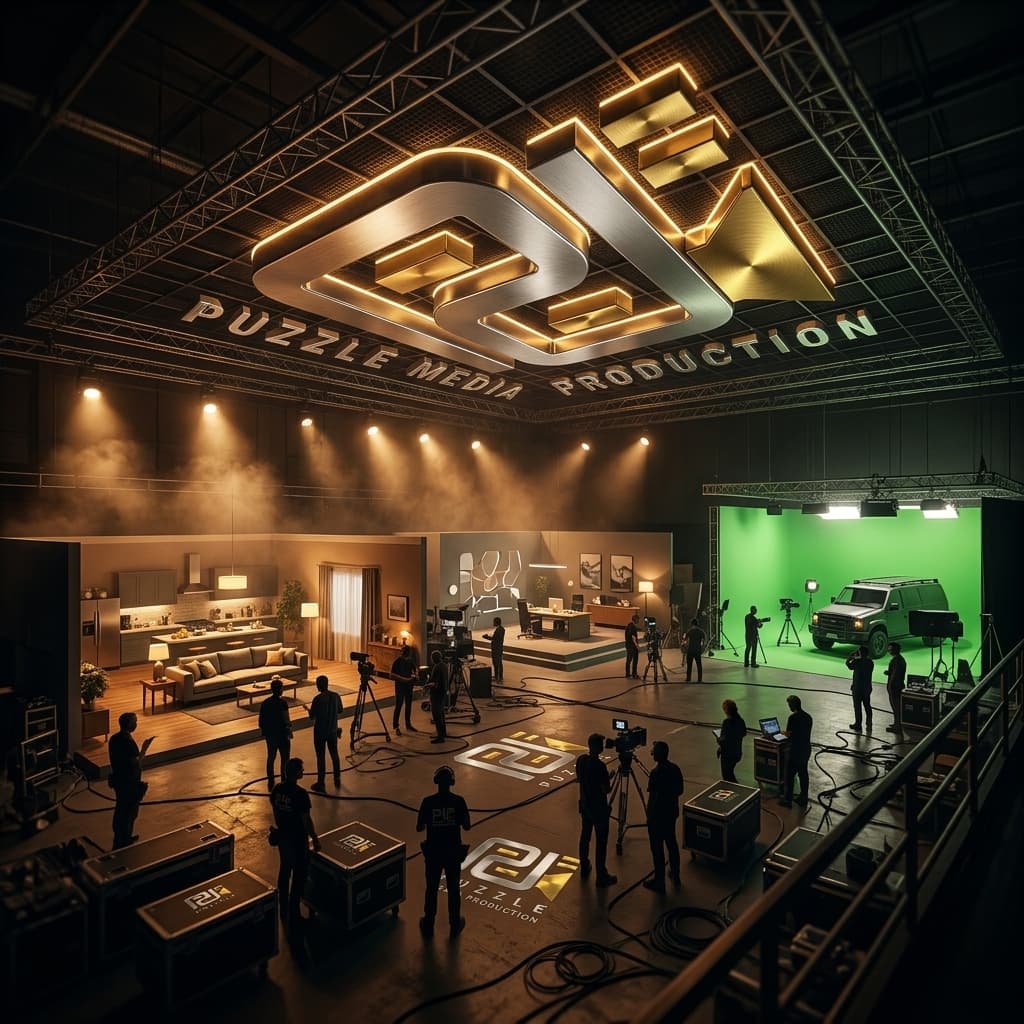 Campaign Scale
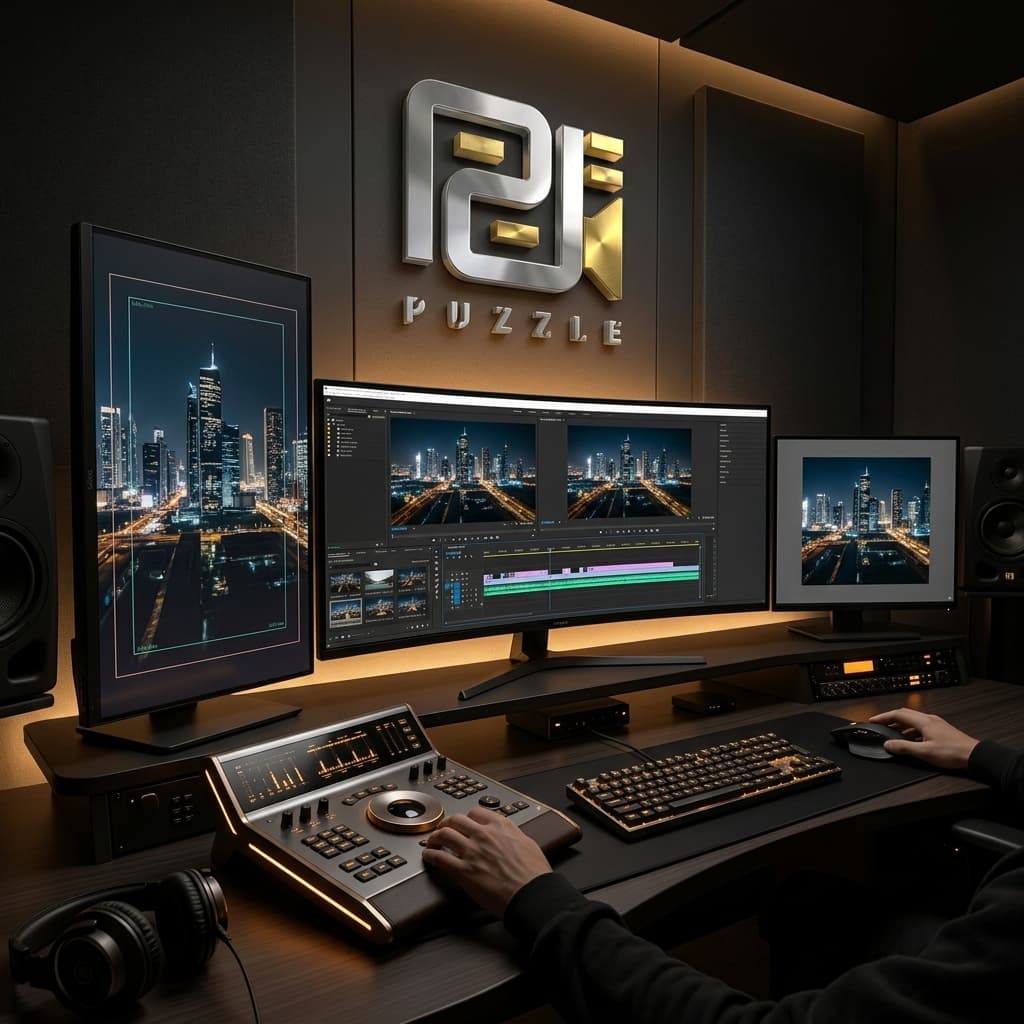 End to End Process
Before you brief us
The questions we are actually asked.
What separates a campaign from a single commercial?
Planning, mostly. A commercial is one film delivered to spec. A campaign is one proposition carried across every surface the audience will meet it on — broadcast, feed, display, retail, and owned channels — where each asset has to be individually correct and collectively identical in voice. That coordination is designed before the shoot, in the asset matrix, not improvised afterwards.
Can you handle the strategy, or do we bring an agency's brief?
Both work. If you bring an approved proposition from an agency, we begin at Architecture and build the production system around it. If you bring a business objective and no creative, we run Insight and Proposition first. What we will not do is start shooting against a brief that has not survived a hostile question, because that is where campaigns quietly fail.
How many assets can come out of one shoot?
A well-planned two-day campaign shoot routinely yields a hero film, four to six cutdowns, vertical and square versions of each, a stills set for OOH and press, product and endcard material, and behind-the-scenes content — commonly eighty or more delivered files. The number is set by the matrix agreed in Phase 03, not by what the footage happens to allow afterwards.
Do you produce Arabic and English versions?
Yes, and we plan them in parallel rather than sequentially. Scripts are written so the line works in both languages, casting accounts for the performance in each, and typography and supers are designed for Arabic rather than adapted to it. Retrofitting a second language onto a locked film is where most regional campaigns lose their polish.
Can you deliver to broadcast and platform specifications?
Every destination on the media plan gets a file built to its published specification — codec, container, frame rate, loudness, and safe area — and each submission is checked before it reaches you. Our advertising work has been broadcast on MBC, Rotana, DMC, and CBC; those are broadcast contexts our films have appeared in, and their QC standard is the one the whole asset set is finished to.
What do you need from us to quote a campaign?
The objective, the audience, the media plan or its likely shape, the asset list if one exists, the markets and languages, the flight dates, and the approval structure. If several of those are still open, that is normal and it is exactly what Insight and Architecture are for — but the quote will be a range until they close.
Explore the discipline
Production services.
Production
The six-phase production process every campaign asset is produced through.
View service 02Commercials & Branded Content
Single-execution creative development, production, post, and delivery.
View service 03Television & Film
Longer-form development with narrative and operational continuity.
View service 04Digital Marketing & Content
The Growth capability that carries campaign output into channel and audience.
View serviceBring us the objective.
If the proposition is already approved, we start at architecture. If it is not, that is the more useful conversation — and it is the cheapest place to change your mind.